

A website quote should help you make a decision. It should not make you guess what words such as “complete website” or “SEO included” actually mean.
The lowest total is not always the least expensive choice. A vague quote can become costly when essential work appears later as an add-on, or when the business discovers it cannot update, move or properly measure the finished site.
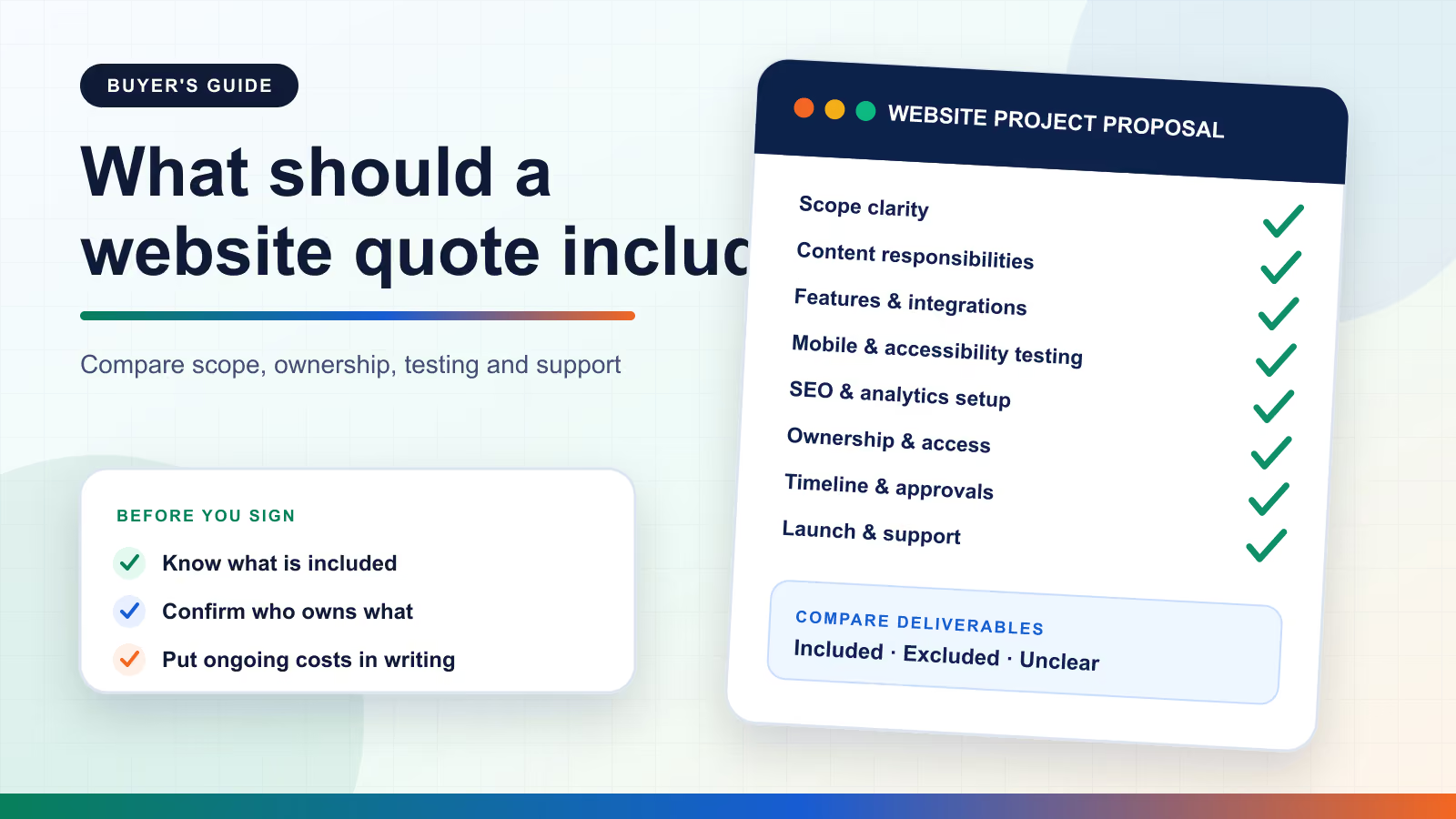
A useful website quotation defines the pages, design, content responsibilities, functions, testing, ownership, ongoing costs, payment stages and support. Compare what you will receive and what remains your responsibility, not only the final price.
1. Business goal and audience
The quote should begin with a short understanding of the project. Is the website expected to generate enquiries, sell products, explain services, support members or present a portfolio?
This matters because the same number of pages can require very different journeys. A clinic needs trust, service clarity and enquiry options. An online store needs product discovery, checkout and operational integrations.
2. Exact page or template scope
Look for an agreed list of pages or reusable page types. “Ten pages” is clearer than “standard website,” but a list is better still.
Confirm whether the price covers:
- Individual service or product pages
- Blog and category pages
- Legal pages
- Thank-you and error pages
- Search, filters or account areas
- Location or multilingual pages
Also ask how additional pages will be priced.
3. Design approach
“Custom design” can mean anything from a colour change to a complete design system. The quote should explain whether it includes discovery, wireframes, desktop and mobile layouts, revision rounds and reusable components.
If a theme or template will be used, that is not automatically a problem. It should simply be disclosed so you can judge the fit and licensing.
4. Content responsibilities
Many delays begin here. Identify who supplies text, photographs, product information, policies, testimonials and translations. If the agency is writing or editing content, the number of pages and review rounds should be stated.
Do not assume that placeholder text will become finished sales copy without a written content scope.
5. Features and integrations
List every important action a visitor or administrator must complete. Examples include forms, appointment booking, payment gateways, shipping, subscriptions, maps, CRM connections, member login and file downloads.
For third-party tools, confirm setup work, licences, transaction charges and which account will own the connection.
6. Mobile, accessibility and browser testing
A responsive website should work on practical screen sizes, not just shrink on a phone. Ask which browsers and devices are tested and what happens when content becomes longer than the design sample.
If accessibility is required, name the target, such as WCAG 2.2 Level AA, and define the audit, testing and evidence included. Accessibility-first development improves the foundation, but formal conformance requires an agreed test scope.
7. SEO and analytics
“SEO included” is too broad. A website build may include technical foundations such as titles, descriptions, crawl controls, sitemap, redirects, structured data and analytics setup. Ongoing content, authority building and search monitoring are separate activities.
No responsible quote can guarantee a number-one Google position.
8. Ownership and access
The proposal should say who controls:
- The domain registration
- Hosting account
- Website administration
- Analytics and Search Console
- Design files and supplied content
- Source code and reuse rights
- Paid plugins, fonts and stock media
Ownership and source-code access depend on the commercial model. Put the agreed position in writing.
9. Schedule, approvals and dependencies
A delivery date is useful only when both sides understand the dependencies. The quote should identify when content, feedback, approvals, payment and third-party access are required.
It should also explain what happens when the scope changes.
10. Payment and cancellation terms
Check the project total, GST, payment stages, invoice timing and refund or cancellation terms. Milestone billing can make progress easier to review, but the exact arrangement should match the work.
11. Launch and support
Clarify who handles the launch, redirects, form testing, analytics checks, backups and handover. Ask how long post-launch support lasts and what it covers.
Maintenance, hosting, content updates and new functions are different services. The quote should keep them separate.
A simple comparison method
Create three columns for every proposal: included, excluded and unclear. Ask the agency to resolve the unclear items before you decide.
The best quote is not necessarily the longest. It is the one that lets both sides understand the same result.
If you want help defining the scope before comparing options, request a website quote from eLan Technology.
Related planning guides
- Compare the practical strengths of WordPress and custom development.
- Compare Medusa.js and Shopify when custom commerce is part of the scope.
- Use the WCAG 2.2 AA guide to define accessibility requirements in plain language.
- Start with a free website audit if you are replacing or improving an existing site.