

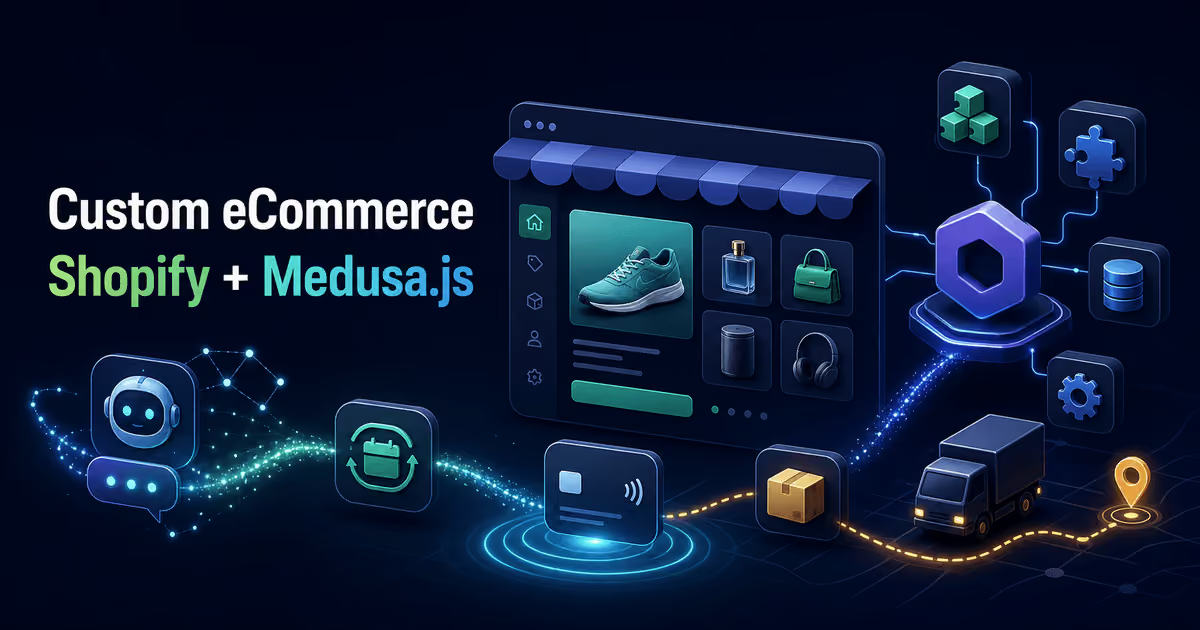
Shopify, WooCommerce and Medusa.js can all support an online store, but they solve the problem in different ways.
The right choice is not the platform with the longest feature list. It is the one that matches how your team sells, updates products, handles orders and plans to grow.
Choose Shopify for a managed commerce foundation and a straightforward operating experience. Choose WooCommerce when WordPress content and plugin flexibility are central. Consider Medusa.js when your business needs custom commerce workflows and accepts greater development responsibility.
Quick comparison
| Question | Shopify | WooCommerce | Medusa.js |
|---|---|---|---|
| Starting point | Hosted commerce platform | Ecommerce added to WordPress | Configurable commerce foundation |
| Often suits | Brands that want managed operations | Content-led businesses using WordPress | Businesses with custom workflows or integrations |
| Hosting | Managed as part of Shopify | Chosen and managed separately | Chosen and managed separately |
| Custom storefront | Themes or custom/headless build | Themes or custom WordPress build | Usually a custom storefront |
| Maintenance | Platform managed, apps and theme still need attention | WordPress, plugins, theme and hosting need care | Application, infrastructure and integrations need an experienced team |
Choose Shopify when simplicity matters
Shopify brings products, orders, checkout and store administration into a managed service. It is a strong fit when the business wants to launch without managing the main commerce infrastructure.
A standard theme may be enough for a young store. A custom Shopify storefront becomes useful when the brand needs a more distinctive shopping journey, stronger content or specific integrations.
Check app costs and operational fit before assuming every requirement needs an app.
Choose WooCommerce when WordPress is central
WooCommerce can be a practical choice when a business already uses WordPress and content is closely connected to the store. It provides substantial flexibility through themes and plugins.
That flexibility also creates responsibility. Hosting, security, backups, plugin compatibility and performance need active management. The cheapest plugin combination is not always the most stable long-term setup.
Consider Medusa.js for custom commerce rules
Medusa.js gives a development team more freedom to shape the commerce backend and connect it to a custom storefront. It can suit subscriptions, special payment flows, custom fulfilment and operational integrations that do not fit a standard store.
Our Puritas implementation includes custom subscriptions, Razorpay, PhonePe and shipping workflows built for that project. Those features demonstrate experience, but they are not automatically included in every Medusa.js proposal.
Read more about our Medusa.js ecommerce development.
Decide from operating questions
Before selecting a platform, answer:
- How many products and variants will you manage?
- Who updates the catalogue and content?
- Which payments, shipping and tax workflows are required?
- Do you need subscriptions, marketplaces or business pricing?
- Which systems must exchange data with the store?
- What can your team maintain internally?
- What monthly third-party costs are acceptable?
- Who owns accounts, data and custom code?
Do not choose from the storefront alone
Two stores can look similar while creating very different work behind the scenes. Ask the people who manage orders, inventory, returns and customer support to join the decision.
The platform should make their routine clearer, not simply make the homepage attractive.
Our recommendation
Start with a short requirements document and compare each option against it. Use a standard platform when it meets the need. Invest in custom development only where it creates a clear customer or operational benefit.
eLan Technology works with Shopify, WooCommerce, Medusa.js and other ecommerce options. Request an ecommerce quote and we will explain the fit in plain language.