

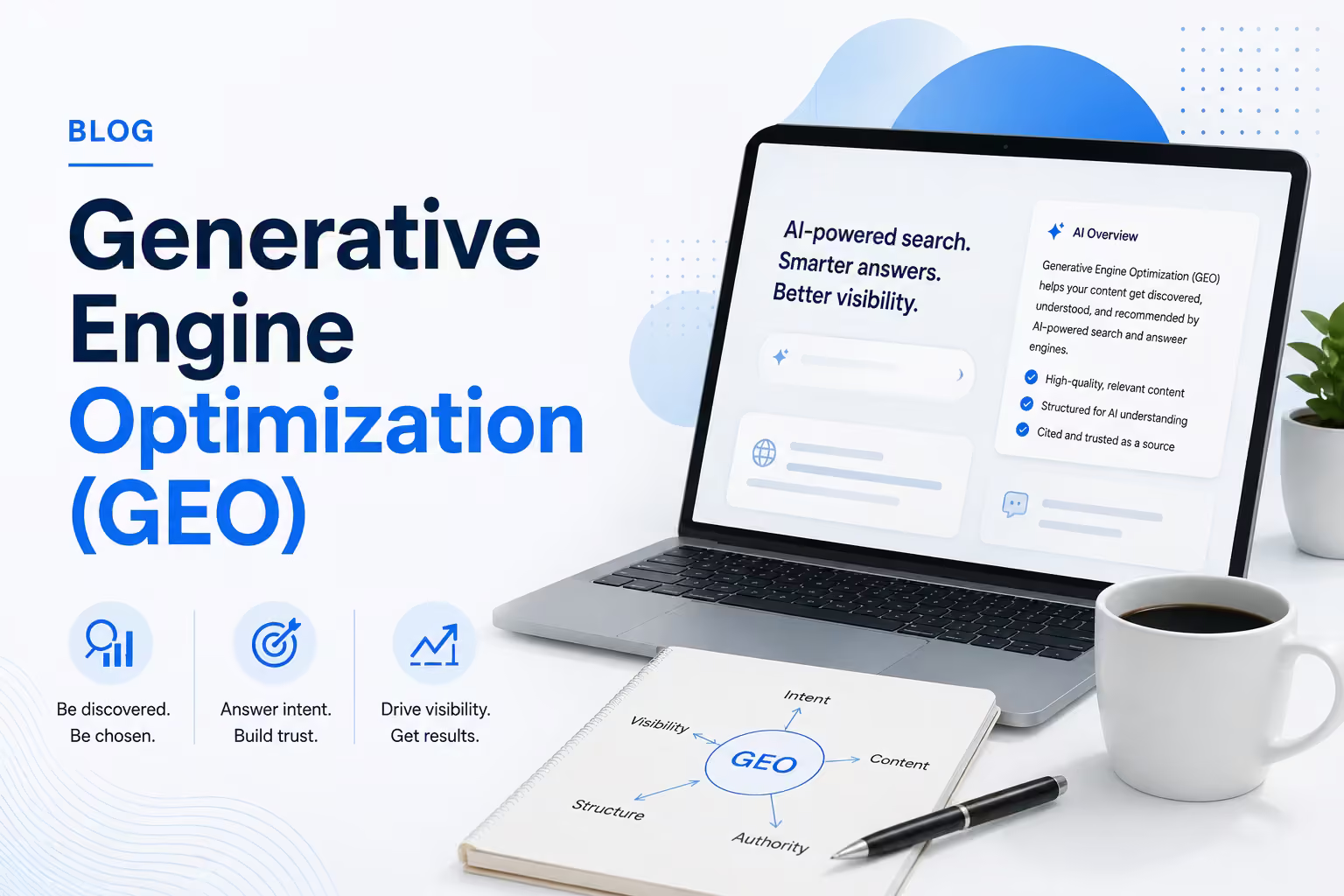
The way people find information changed faster than most businesses noticed. By early 2026, ChatGPT serves roughly 800 to 900 million weekly users, Perplexity handles hundreds of millions of monthly queries, and Google’s AI Overviews appear above traditional results for a vast share of searches - exposing well over two billion people to answers that are generated, not merely listed. In this new landscape, the goal is no longer only to rank on a page of blue links. It is to be the source the AI cites when it writes the answer.
Generative Engine Optimization, or GEO, is the discipline of earning those citations. This guide explains what GEO is, how it differs from the SEO you already know, and the specific, practical changes that make your website citation-worthy in 2026.
What Generative Engine Optimization Actually Means
When someone asks ChatGPT, Perplexity, Gemini, or Google’s AI Overview a question, the engine does not hand back ten links and let the user choose. It composes a direct answer, and - for the engines that retrieve live web content - it pulls from a small set of sources it deems trustworthy, then cites them. GEO is the work of becoming one of those cited sources.
The distinction from traditional search matters. In classic SEO you compete for position one through ten on a results page, and a click is the prize. In GEO there may be no results page at all; the prize is being quoted, named, or recommended inside the generated answer. A business can be invisible in that answer even while ranking respectably in classic search, and the two outcomes are increasingly decoupled.
GEO Is a Layer on Top of SEO, Not a Replacement
It is important to be clear about this, because the hype suggests otherwise. GEO does not retire SEO. The brands that get cited most often by AI engines are, overwhelmingly, the same brands with strong traditional SEO foundations - solid technical health, crawlable content, and genuine authority. Google itself has stated that optimizing for generative AI search is still SEO.
What GEO changes is emphasis. Keyword density, exact-match meta descriptions, and raw backlink counts matter less than they used to. Content structure, citation-friendliness, data richness, entity clarity, and verifiable authority matter more. If your SEO house is in order, GEO is the next layer you build on top of it - not a teardown.
The GEO Playbook for 2026
1. Front-load your answer
AI systems that retrieve content in real time, including Perplexity and Google AI Overviews, judge a page’s relevance largely on its opening content. The first 150 to 200 words of any page should directly and completely answer the primary question - not warm up to it, not set the scene, not bury the conclusion under three paragraphs of context. Lead with the answer, then expand. This single change is among the highest-return moves you can make to existing content.
2. Write headings as the questions people actually ask
AI engines pattern-match headings against queries. A heading that reads “What Is Generative Engine Optimization?” is far more likely to be cited for the query “what is generative engine optimization” than a heading that reads “GEO Overview” or “Understanding GEO.” Audit your existing cornerstone pages and rewrite vague section headers into the literal questions your customers type and speak. It is low effort and disproportionately effective.
3. Include specific, citable data
AI answer systems often benefit from concrete, attributable facts, but invented precision is worse than a careful qualitative statement. Publish specific numbers, dates or case-study outcomes only when the source, method, period and limitations can be shown. If you have permission to publish reliable first-party data, explain how it was produced and avoid presenting correlation as guaranteed causation.
4. Keep your content fresh
Answer engines weigh recency heavily when choosing what to cite. A strong guide published in 2024 and never touched will steadily lose ground to a 2026 article on the same subject. Refresh your most important pages on a schedule: add new data, revise outdated claims, and surface a clear “last updated” date. On this site, our content schema includes an updatedDate field for exactly this reason - material revisions should be timestamped so engines can see the content is current.
5. Build entity authority and third-party validation
AI engines build a model of who you are and what you are credible about. Consistent naming, clear “about” information, named authors with real expertise, structured data, and mentions across reputable third-party sources all strengthen your entity. Vague, anonymous, thinly-sourced content is the opposite of what gets cited.
6. Make your site machine-readable for AI crawlers
Beyond the content itself, give AI systems a clean path to it. That means valid structured data (Organization, FAQPage, Article, BreadcrumbList), a well-formed sitemap, a robots.txt that welcomes the major AI crawlers rather than blocking them by accident, and - increasingly - an llms.txt file that maps your most important pages for answer engines. These are the plumbing of GEO.
7. Measure what you can
Measurement is the biggest gap in most GEO programmes today. Marketers with years of Google Analytics fluency often have no visibility at all into AI search. Begin tracking how often your brand appears in AI-generated answers, your share of voice against competitors across the major engines, and any referral traffic the AI tools do send. You cannot improve what you never look at.
A Quiet Advantage: This Doubles as Better SEO
Here is the part most GEO articles understate. Almost everything on the list above - answering quickly, question-shaped headings, citable data, freshness, structured data - also improves your standing in classic search. Front-loading answers improves engagement. Question headings capture People-Also-Ask and featured-snippet placements. Fresh, data-rich pages earn links. GEO is not a separate budget fighting SEO for resources; done well, it is the same work pointed at a larger audience.
If you have pages that already rank on the second page of Google but earn few clicks, applying the GEO playbook to them is often the most efficient way to lift them - because you are improving relevance, structure, and freshness all at once.
How eLan Technology Helps
eLan Technology can scope answer-engine readiness through semantic HTML, useful answer-focused content, accurate structured data, crawl controls and discoverable source attribution. XML sitemaps, robots.txt and llms.txt serve different purposes, and none guarantees a Google ranking or an AI citation.
For existing sites, a GEO review can assess content structure, source clarity, schema coverage, freshness signals and crawler access, then provide a prioritised improvement plan. Pages may be restructured to answer relevant questions more clearly, but search positions and AI citations remain decisions made by third-party systems and cannot be guaranteed.
If you want to make your website easier for search and answer systems to interpret, our SEO service and free website audit are a practical starting point. Inclusion, rankings and citations are not guaranteed.
Final Thoughts
Search did not disappear in 2026; it split. Alongside the familiar page of links sits a generated answer that billions of people now read first, and that answer is built from a handful of cited sources. Generative Engine Optimization is simply the work of earning a place among them - by answering clearly, structuring honestly, backing claims with data, staying current, and making your site easy for machines to read.
None of it requires abandoning the SEO you have invested in. It asks you to extend that work into the format the next billion queries will take. The businesses that start now will be the cited authorities of the AI search era; the ones that wait will be quoting them.